Build balance, strength and coordination through progressive stability training.
Single-leg stability work builds the kind of foundation that carries over to every sport, daily movement and overall fitness. Start by standing with your back foot flat on the ground and your front foot bent at roughly ninety degrees, hands resting on your hips. Raise yourself up about a foot, keeping that front foot planted firmly, then lower slowly with control. When you touch the floor, hold for a moment before driving back up. Do not rush through this — quality reps matter far more than speed. If your form starts breaking down, stop. Pushing through sloppy movements is how injuries happen and the most common culprit is letting both legs hit the ground while the back leg still moves.
Keep your core engaged, maintain that bent knee position and repeat four to six times per side before changing direction. The lower you go and the longer you hold the bent position, the more demanding the exercise becomes. Each directional shift challenges your balance muscles in a slightly different way, which is exactly why you alternate left to right and back again. The kneecap exercise sounds intimidating by name, but it is simply controlled knee flexion done with intention. Stand on one leg, bend that knee slightly and let the opposite heel tap the floor, then alternate legs. Keep your knees loose through the movement — do not lock them out at any point. The next day, return to the exercise but increase the depth just a touch, since gradual loading is what protects long-term knee health.
🏊♀️
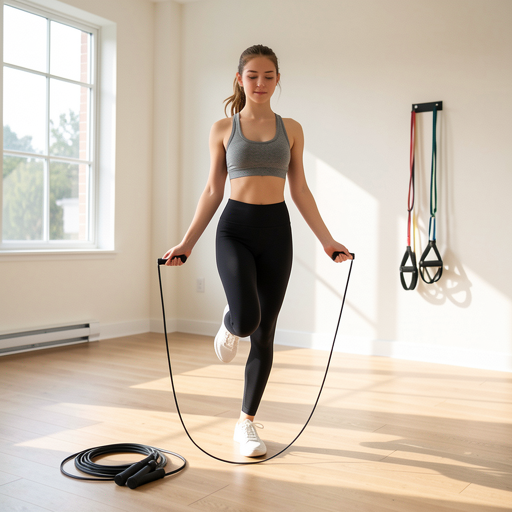
You will feel muscle fatigue and mild soreness and that is normal. Pain during training does not mean you are doing something wrong as long as the movement stays clean and the discomfort stays within your muscles, not your joints. Consistent, gradual overload is what builds real strength and endurance. This approach mirrors the discipline you develop when you commit to jumping rope regularly, where small improvements compound over weeks and months into noticeable performance gains. Seated leg raises performed in circles take balance training to another level. Begin on the left leg, slowly rotating ninety degrees to the right, then continue the circle until you complete a full rotation. Switch to the right leg and repeat.
웃
The objective is to keep that knee cap pressed into the ground throughout the entire motion while your standing leg lifts and traces the circle. More repetitions mean your muscles learn to stabilize under greater fatigue and that translates directly to better movement control. You will notice your balance muscles firing harder than expected, especially toward the end of each set. This is where growth happens — at the edge of what feels manageable. Pair this with the steady rhythm of learning to skip and you have a potent combination for developing lower-body resilience and coordination. The in-and-out butt exercise finishes your routine by challenging rear-chain stability.
🧜🏽♀️
Stand behind your back foot, lift both legs toward the ceiling until one leg reaches the top, then lower the other leg back toward the floor. This movement forces you to manage your center of gravity while your glutes and hamstrings fire hard to keep everything aligned. Control the descent as much as the ascent. Every rep should feel deliberate. When you build a habit of combining these kinds of stability exercises with jumping rope, you create a training approach that strengthens balance, builds lean muscle and improves coordination at the same time. The benefits stack up quickly and your body will thank you for the investment.